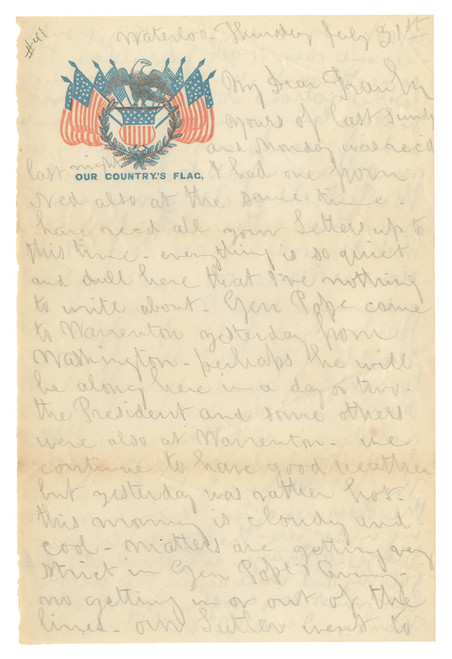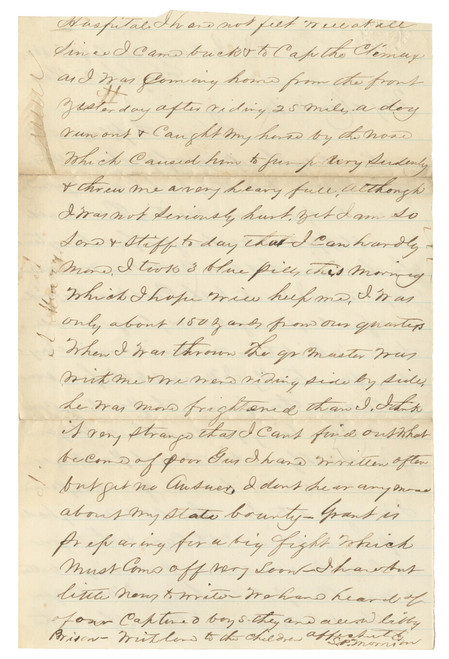


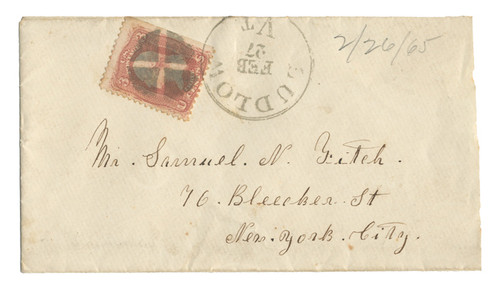
Accompanied by original envelope addressed to “Mr Samuel N. Fifth 76 Bleeker St. New York City.” With circular “Ludlow” postal cancellation. Pratt writes to her cousin, in part: “... We shall look for William & John home the first of April & we shall all be glad to see them but as you wrote poor Brother George will never come back. It seems as though it could not be it is just about a year since he was at home ... he often told us that three years was but a short time ... how true is the saying that man may appoint but God disappoints. oh how cruel is War it seems hard to loos [sic] a leg ore [sic] an arm but that is nothing compare with the loss of life. We here [sic] from John often he feels anxious to get home he thinks the nearer his time draws to a close the slower it passes away .. he is at Finley Hospital, Washington. They think here that his War will soon be brought to a close I wish I could think so but I cannot what do you think about it ...” Very Fine. This letter was written on February 26, 1865, only weeks before the end of the Civil War. The writer, Lucy C. Pratt, reflects on the human cost of the conflict, mourning a relative, George, who will "never come back," while anxiously awaiting the return of William and John. Particularly poignant is her observation: “how cruel is War ... it seems hard to lose a leg or an arm but that is nothing compare with the loss of life.” The reference to Finley Hospital in Washington, D.C. is significant. Finley General Hospital was one of the major Union military hospitals established to care for wounded and sick soldiers during the war. The letter captures the uncertainty of the final months of the conflict—many Northerners hoped peace was near, yet after four years of war many remained reluctant to believe it would soon end. As a result, the original letter offers a moving civilian perspective on loss, hope, and anticipation during the closing weeks of the American Civil War.

SOLDIER WRITES HOME DURING THE CIVIL WAR
$195.00
- SKU:
- Ludlow1865